Add Safety and Structure to Stairs and Decks
Handrails and Log Railings in Dillon for decks, stairs, and entries that lack code-compliant guardrails or show rot damage
JMM General Construction LLC builds custom handrails and log railings for residential properties in Dillon where stairs, decks, and elevated entryways need secure gripping surfaces and guardrails that meet current building codes. You need railings that support full body weight without flexing, resist moisture intrusion at post connections, and integrate visually with log homes or timber-framed architecture without looking grafted on.
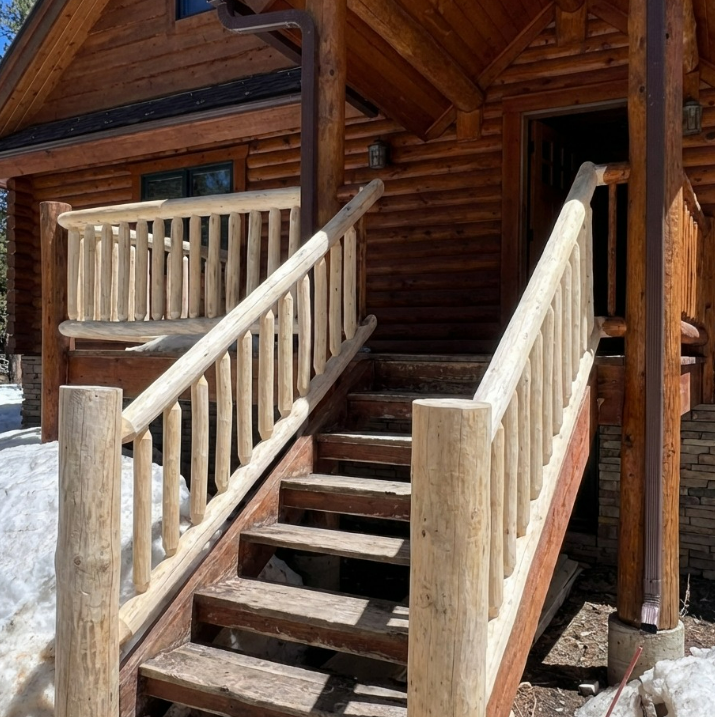
Railing installation starts with measuring the height and run of the stairs or deck, calculating post spacing to keep infill balusters within code limits, and selecting wood species that match or complement existing finishes. In Dillon, log railings made from peeled and finished lodge pole or spruce fit mountain architecture and provide a hand-hewn look, while milled handrails in cedar or fir offer clean lines and consistent dimensions. Posts anchor to the deck frame or stair stringers with through-bolts or lag screws, and top rails are mortised or notched to sit flush with post caps. Infill may be vertical balusters, horizontal cable, or tempered glass panels depending on the desired transparency and maintenance tolerance.
Contact us to review your deck or stair layout and discuss railing styles that meet safety requirements and match your home's design.
How Railings Improve Function and Appearance
You begin by confirming the height differential and load requirements for the railing, then cut and notch posts to fit the framing. Handrails are shaped to provide a comfortable grip diameter, typically between one and a half and two inches, and are sanded smooth to remove splinters. Post connections are reinforced with blocking or steel brackets where the deck structure does not provide adequate backing, and all hardware is countersunk and sealed to prevent water entry that leads to rot at fastener points.
After installation, you have a stable gripping surface that makes stairs easier to navigate in winter and a guardrail that prevents falls from elevated decks. The railing runs continuously without gaps or loose sections, and the finish matches the surrounding woodwork in color and texture. JMM General Construction LLC adjusts post height and rail profile to suit the architecture, so log railings blend with timber homes and milled railings align with more contemporary exteriors.
Customization includes carving or routing decorative details into posts and rails, integrating lighting into post caps, or adding lower rails for pets and small children. The work does not include structural reinforcement of the underlying deck or stair frame if it is undersized or damaged, or refinishing of existing railings that are being replaced. If posts attach to masonry or concrete, anchor bolts and sleeves are installed to prevent direct wood contact with moisture-retaining surfaces.
Common Questions About Handrail and Log Railing Projects
Homeowners in Dillon often ask about code compliance, material durability, and how railings perform in high-traffic or weather-exposed locations.
What is the required height for deck railings in Colorado?
Guardrails must be at least thirty-six inches high measured from the deck surface, and balusters or infill must prevent a four-inch sphere from passing through to meet residential building codes.
How do log railings hold up to snow and sun exposure?
Peeled logs absorb and release moisture more than milled lumber, so they require annual treatment with UV-resistant sealant to prevent cracking, graying, and insect intrusion in Dillon's high-altitude climate.
When should handrails be added to outdoor stairs?
Any stair run with more than three risers or a total rise exceeding thirty inches typically requires a handrail for safety and code compliance, especially where ice and snow make footing uncertain.
Why do some railings feel loose or wobbly after installation?
Undersized posts, insufficient fastener penetration into framing, or missing blocking at attachment points all reduce stiffness and allow movement under lateral load, which compromises safety and accelerates wear.
What types of wood work best for exterior handrails?
Cedar and redwood resist decay and require less frequent sealing, while treated pine offers durability at lower cost if you maintain the finish to prevent checking and splinter formation along the grip surface.
JMM General Construction LLC designs and installs handrails and log railings that meet safety standards and complement your home's materials and layout. Call to schedule a consultation and discuss custom options that fit your site and use requirements.